

Perioscopy in Long Island, NY – Nonsurgical Gum Treatment
Click above to see reviews.
OraVu – A New Fiber Optic Camera
The problem of gum disease is plaque and calculus (hard crusty deposits) under the gum. This causes the gum to be inflamed and the bone around the teeth to be destroyed.
Traditionally there were only 2 options to treat gum disease, scaling and root planing (“deep cleaning”) and gum surgery. The limitation of “deep cleaning” is that it’s impossible to get all the plaque and calculus out. In fact, numerous studies show that once the pocket reaches 5mm deep, there is a 90% chance that the root will be left contaminated—And that is in the hands of expert hygienists given unlimited time to clean the root!!
One of the reasons to do gum surgery is to peel the gum back from the tooth so that we can see the plaque and tartar on the root of the tooth and get it out. That works very well, but who wants gum surgery and stitches?
Nonsurgical Solution
As in other areas of medicine, technology provides us with a solution to this problem. What if instead of peeling back the gums to see the root of the tooth, we had a tiny camera to put into the gum to see it? This procedure exists and is called perioscopy.
Using a dental endoscope we can see into the pocket and get a view of the root magnified 40 times. This allows us to get the root clean and treat gum disease without cutting and stitching.
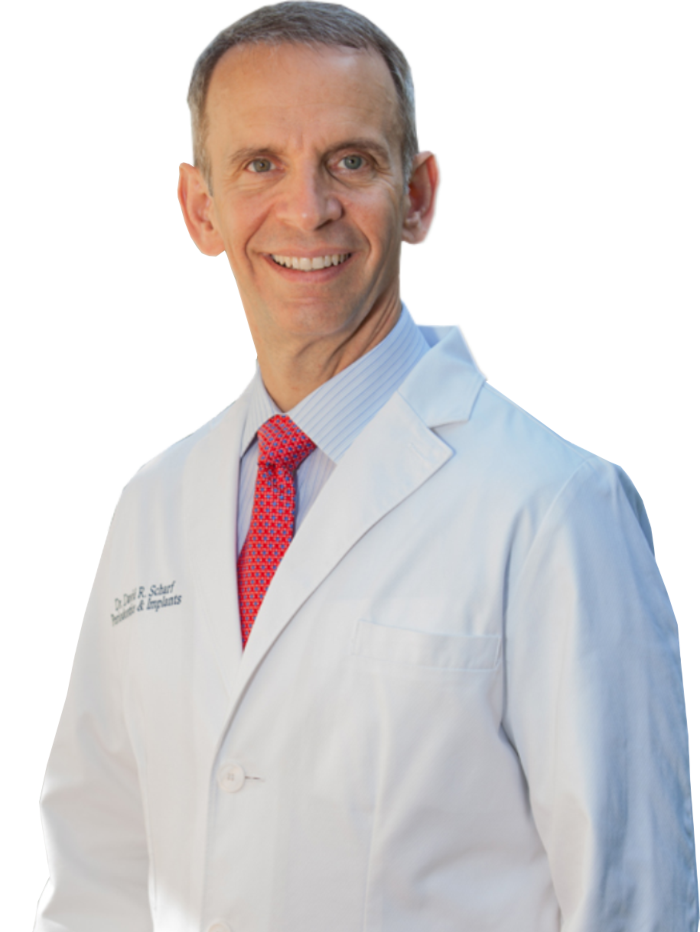
Dr. David Scharf has been the leader in providing perioscopy on Long Island for over 20 years. We use endoscopes from both Zest Dental and the DeVA-1® by OraVu. Many patients who come to our office who were told they would need gum surgery are thrilled to learn they can keep their teeth and avoid surgery.
Minimally Invasive Technique
If you’re visiting our Long Island Periodontist Office, chances are you’ve already been through examinations and techniques to stop or slow down dental damage under the gumline.
Even the best patient – you! – can start feeling weary of being poked and prodded, or worry about recovering when you’ve got a busy schedule.
The long-standing way of thoroughly cleaning the roots of your teeth was through gingival flap surgery. It’s a procedure that requires incisions to fully expose the root, stitching, a week or two of healing time, and the potential use of opioid prescriptions, which many patients hope to avoid.
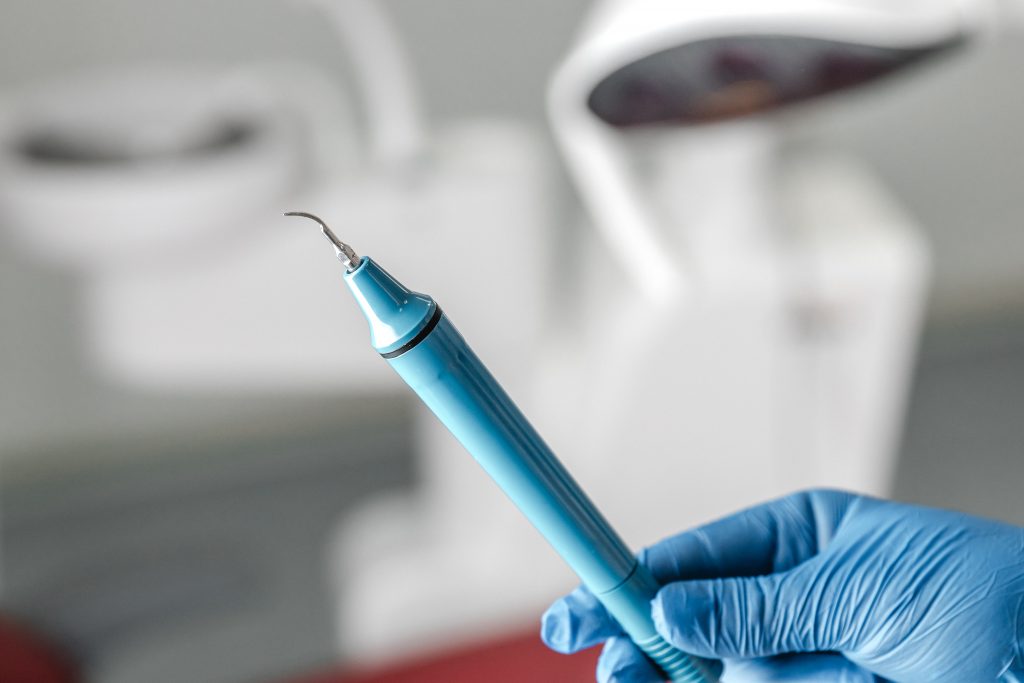
Our way is by using the OraVu microendoscope, an ultra-fine camera mounted on the end of a fiber-like stem. This ultra-thin camera gives it the ability to slip below the gumline without an incision.
What It Means for You
If you’ve been delaying getting expert dental care because you’re concerned about pain or the need for outpatient surgery, OraVu delivers a solution that helps Dr. Scharf’s team protect your dental health and preserve your smile with precision.
Long Island Perioscopy in NY
ADDRESS:
98 East Main Street
Babylon, NY 11702
Get Directions
PHONE: (631) 661-6633
OFFICE HOURS:
- Monday: 11:00 AM to 8:00 PM
- Tuesday: 8:00 AM to 5:00 PM
- Wednesday: 8:00 AM to 5:00 PM
- Thursday: 8:00 AM to 5:00 PM
- Friday: 8:00 AM to 5:00 PM