

If your gums bleed when you brush, you have probably wondered whether the damage is permanent. It is one of the most common questions patients bring to Dr. David R. Scharf, a board-certified periodontist serving Long Island, NY, and the answer depends entirely on which stage of gum disease you are dealing with.
Gum disease is not a single condition. It is a progression, and there is a specific point along that progression where the damage stops being reversible. Understanding where that line falls is the difference between a problem you can undo and one you will manage for the rest of your life.
The Short Answer
Gingivitis can be reversed. Periodontitis cannot be reversed, but it can be stopped.
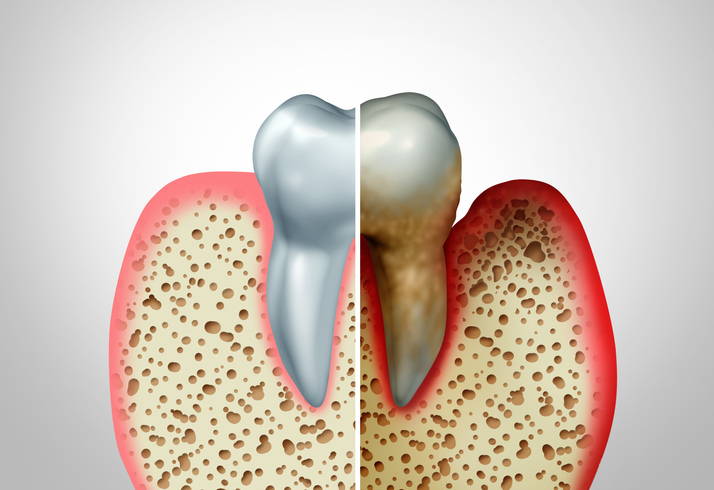
Gingivitis is inflammation of the gum tissue only. Because no permanent structures have been damaged, professional cleaning combined with consistent home care can return your gums to full health.
Periodontitis is what happens when that inflammation spreads below the gum line and begins destroying the bone and connective tissue that hold your teeth in place. Bone that has been lost to infection does not regrow on its own. Treatment at this stage focuses on halting the disease, controlling the infection, and, in some cases, rebuilding what was lost through surgical or regenerative procedures.
What Is Gingivitis?
Gingivitis is the earliest stage of gum disease. It develops when plaque, a sticky film of bacteria, is allowed to sit along the gum line long enough to trigger an inflammatory response. Your gums become irritated, swollen, and prone to bleeding.
Common Signs of Gingivitis
- Pink in the sink when you brush or floss
- Gums that look red or puffy rather than firm and pale pink
- Tenderness along the gum line
- Persistent bad breath
- Gums that feel sensitive during routine cleanings
Why Gingivitis Is Reversible
At this stage, the infection lives on the surface of the gum tissue and in the plaque above and just below the gum line. The bone supporting your teeth has not been attacked, and the fibers that attach gum tissue to the tooth are still intact. Remove the bacterial cause, and the inflammation resolves. Most patients see a meaningful difference within two weeks of a professional cleaning and improved home care.
The catch is that gingivitis is easy to ignore. Bleeding gums are often dismissed as brushing too hard, and many people wait until symptoms worsen before scheduling an appointment. That waiting period is when the condition has the opportunity to advance.
What Is Periodontitis?
When gingivitis goes untreated, bacteria migrate deeper. Plaque hardens into tartar below the gum line, where a toothbrush cannot reach it. The body’s immune response to that persistent infection begins to break down the bone and ligament anchoring your teeth. The gums pull away from the tooth surface, forming pockets that trap more bacteria and deepen over time.
Common Signs of Periodontitis
- Gums that have receded, making teeth appear longer
- Deep pockets between teeth and gums measured during a periodontal exam
- Loose or shifting teeth
- A change in how your teeth fit together when you bite
- Tartar buildup below the gum line
- Pus or drainage around the gums
- Chronic bad breath that does not improve with brushing
It is also entirely possible to have periodontitis with no obvious symptoms at all. This is why Dr. Scharf recommends routine examinations at least twice a year, where early bone loss can be detected on X-rays and through pocket depth measurements long before you would notice anything yourself.
Why Periodontitis Cannot Be Reversed
The distinction comes down to what has been lost. Inflamed gum tissue heals. Destroyed bone does not spontaneously rebuild itself, and the attachment between the tooth root and the supporting structures does not regenerate on its own once it is gone.
This does not mean the situation is hopeless. Periodontitis is highly treatable. The goal shifts from reversal to control: eliminating the bacterial infection, reducing pocket depths so the area can be kept clean, stabilizing the teeth, and preventing further loss. With the right treatment and consistent maintenance, many patients keep their natural teeth for decades.
Gingivitis vs. Periodontitis at a Glance
| Gingivitis | Periodontitis | |
|---|---|---|
| What is affected | Gum tissue only | Gum tissue, bone, and connective tissue |
| Bone loss | None | Yes, progressive |
| Gum recession | Minimal to none | Common |
| Pocket depth | Typically 1 to 3 mm | 4 mm or greater |
| Tooth mobility | None | Possible in advanced stages |
| Reversible? | Yes | No, but it can be stopped and managed |
| Typical treatment | Professional cleaning, improved home care | Scaling and root planing, laser therapy, pocket reduction, tissue reconstruction, ongoing maintenance |
How to Reverse Gingivitis
If your gum disease has been caught at the gingivitis stage, reversing it is straightforward but requires consistency:
- Get a professional cleaning. Tartar cannot be brushed away. It must be removed with instruments in a dental setting.
- Brush twice daily for two full minutes with a soft-bristled brush, angling the bristles toward the gum line rather than scrubbing straight across.
- Clean between your teeth every day. Floss, interdental brushes, or a water flosser all work. What matters is that plaque between teeth gets disrupted daily.
- Address contributing factors. Smoking, uncontrolled diabetes, certain medications, and dry mouth all make gum tissue harder to keep healthy.
- Keep your recall appointments so any recurrence is caught early.
How Periodontitis Is Treated
Once bone loss has occurred, treatment is tailored to the severity of the disease. Dr. Scharf begins with a comprehensive periodontal evaluation, including pocket depth measurements and digital X-rays, before recommending an approach. Options available at our practice include:
- Scaling and root planing: a non-surgical deep cleaning that removes tartar and bacteria from below the gum line and smooths root surfaces so tissue can reattach. For many early-to-moderate cases, this alone resolves the active infection.
- LANAP laser therapy: the Laser-Assisted New Attachment Procedure targets diseased tissue and bacteria within periodontal pockets while preserving healthy tissue. Because it does not require incisions or sutures, many patients report less bleeding and a more comfortable recovery than traditional surgery.
- Periodontal pocket reduction: surgical access to remove infected tissue and reshape the area so pockets return to a depth you can actually keep clean at home.
- Tissue reconstruction and bone grafting: procedures that rebuild lost bone volume, often used in advanced cases or to prepare a site for dental implants.
- Periodontal maintenance: more frequent professional cleanings, typically every three to four months, that keep bacteria from recolonizing treated pockets.
Which of these is appropriate depends on your pocket depths, the pattern of bone loss, your health history, and your goals. That determination requires an in-person evaluation.
Why This Matters Beyond Your Mouth
Periodontal disease is a chronic bacterial infection, and research has linked it to a range of systemic health conditions, including cardiovascular disease, diabetes complications, and adverse pregnancy outcomes. The relationship is complex and still being studied, but the practical takeaway is simple: treating gum disease is a health decision, not a cosmetic one.
Untreated periodontitis is also the leading cause of tooth loss in adults, ahead of decay and injury.
Frequently Asked Questions
How long does it take to reverse gingivitis?
Most patients see noticeable improvement within one to two weeks of a professional cleaning and improved daily home care, with full resolution typically within a month.
Can receding gums grow back?
Gum tissue does not regrow on its own, but grafting and minimally invasive techniques can cover exposed roots and restore the gum line.
Is bleeding when I floss normal?
No. Healthy gums do not bleed. Bleeding is a sign of inflammation and should be evaluated.
Can I have gum disease without pain?
Yes. Periodontal disease is often painless until it is advanced, which is why regular examinations matter so much.
Do I need a periodontist, or can my general dentist treat this?
General dentists manage gingivitis and mild cases well. A periodontist has three additional years of specialized training in diagnosing and treating advanced gum disease, bone loss, and complex implant cases.
Schedule a Periodontal Evaluation in Long Island, NY
If your gums bleed, feel tender, or have started to recede, the most useful thing you can do is find out which stage you are actually in. Dr. David R. Scharf, a Diplomate of the American Board of Periodontology, provides comprehensive periodontal evaluations and advanced gum disease treatment for patients throughout Long Island at his Babylon, NY office.
Request an appointment to learn where your gum health stands and what treatment, if any, you need.